
-

Elie Alhajjar
Elie Alhajjar is a senior scientist at RAND working at the intersection of AI, cybersecurity and government. With a professional background that spans national security, AI and machine learning, quantum technologies, and workforce development, he has witnessed firsthand how multifaceted problems require diverse perspectives and innovative, cooperative solutions. His career has been dedicated to tackling such challenges through research, policy development and strategic implementation, all of which are enriched by understanding and leveraging international perspectives. As a professional who has been working diligently in the U.S. AI policy realm, he has extensive experience in multidisciplinary and interdisciplinary project leadership and a broad record of scientific publications and presentations. Alhajjar holds a Ph.D. in applied mathematics from George Mason University.
-

Jeffrey Bean
Jeffrey D. Bean serves as program manager for technology policy and editor at ORF America. His research focus includes critical and emerging technologies, particularly semiconductors and AI, supply chains and cyberdiplomacy. He leads the organization’s engagement on U.S.-India tech policy issues in Washington, and he speaks and writes regularly on tech policy issues. Previously, he was a visiting fellow at the East-West Center and Tama University, where he conducted research on U.S.-Japan relations and emerging technology supply chain disruption, with a focus on semiconductors. Prior to joining ORF America, Bean worked for a decade with the Asia Programs at the Center for Strategic and International Studies, where he was responsible for tracking political, trade, technology and security developments throughout the Indo-Pacific. Bean holds an M.A. in security policy studies from George Washington University’s Elliott School of International Affairs, where he was a highest honors fellow, and a B.A. in international affairs and political science from James Madison University.
-

Radhika Bhavsar is working to advance global equity through design, systems change and social innovation. She serves as senior technical adviser for innovation at Global Communities, where she leads enterprise-wide innovation initiatives that strengthen health systems and improve outcomes in vulnerable communities globally. By using design and entrepreneurship principles, her work focuses on product development and business model innovation across the nonprofit, academia and health-system sectors. Her past work includes developing and launching the U.S. Navy’s first population health program as a management consultant at Deloitte, supporting pandemic response design at Partners In Health, shaping maternal and infant health product innovation at the March of Dimes and digitizing health care systems in Rwanda’s Northern Province as a Global Health Corps Fellow. Bhavsar has a master of public health degree with a focus on behavioral science, health promotion and global health. She is a WomenLift Health Global Leadership Fellow, and an active lecturer in the Global Health Program at UC San Diego.
-

Michael Carter
Michael Carter is a policy specialist for diplomacy at the Good Food Institute, where he works on international policy issues related to alternative proteins, sustainable food systems and public investment in emerging food technologies. His work includes leading global analysis on government investments supporting alternative protein innovation, including in the institute’s flagship report, "The State of Global Policy: Public Investment in Alternative Proteins."
-
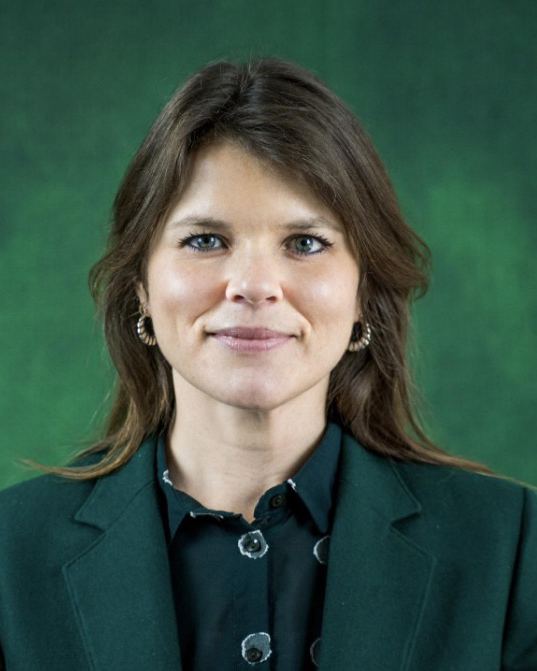
Sheila Casserly
Sheila Casserly is the director of digital policy for the Americas at Schneider Electric, where she leads cross-functional, cross-sector alignment on cyber and digital policy, both internally across the company and externally with trade associations and policymakers. Before joining Schneider Electric, she served at the United Nations Development Program advancing public-private partnerships in international development. Previously, she also taught English to business professionals in Istanbul and was a fellow at the German Parliament in Berlin as a recipient of the International Parliamentary Scholarship. Casserly holds an M.A. in international business and policy from Georgetown University, an M.Sc. in international management from Koc University of Istanbul and a B.A. in geography and international affairs from the University of Wisconsin-Madison.
-

Kristina Kempkey
Kristina Kempkey works at the intersection of AI policy and national security. She is a research scholar in the MATS Program, where she studies AI-enabled bioterrorism and federal emergency response. She is also a fellow at the Future Impact Group, where she is researching how AI affects nonstate actors and great power conflict, and a visiting scholar at UC San Diego. She directs the Technology and Irregular Warfare Center at the Irregular Warfare Initiative. She spent 17 years in the U.S. government, including in multiple posts at the U.S. Agency for International Development across Moldova, Kenya, Mozambique and South Sudan, and for two years as an embedded Defense Department civilian adviser in Afghanistan. She holds an M.A. from Columbia's School of International and Public Affairs and a B.A. from UC Berkeley.
-

Shaina Nanavati
Shaina Nanavati is a researcher and advocate who has been working in state-level energy and climate policy for 13 years. After receiving a master’s in environmental management from Duke University in 2017, Nanavati worked as an analyst for North Carolina’s rural electric cooperatives. She returned to her home state of California, where she joined Reclaim Our Power, an organization advocating for utility governance reform in the face of increasing climate instability and rise in electrification. She received her B.A. in economics and philosophy from UC Davis and will be attending law school in fall 2026.